

I had solved a similar one like this many years ago and I received this via a forward. How many of you can solve this mystery 😀 ?
So here goes…
Three friends went to a hotel and drew up a bill of $75/-
Each contributed $25/- towards this and the waiter took the bill to the cashier.

For some reason unknown, our dear friend the cashier decided to give them a discount and asked the waiter to return $5/-.
Now the waiter was confused. He thought, “How to distribute $5 among 3 persons? ”
So he kept $2 in his pocket & gave one dollar to each one of the 3 persons.
That brings us to the mystery.
Initially each one had contributed $25. And each received one dollar making their contribution $24.
Thus, all contributed Rs 24 — that is 24×3=72 and 2 dollars in the waiters pocket.
The total becomes 74. But they had paid $75.
Where is the missing dollar? 
Note: The clipart image above is courtesy Hassle Free Clip Art


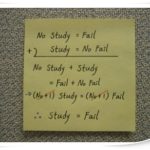


They pay 75 so there are @ – 75
The refund is for 5 but they only receive 3 of it back which puts them at -72
when they should have been at -70. Which is a 2 dollar difference and it’s in the waiters pocket.. they just mix up the wording to confuse … it isn’t that hard.
This so called mystery is worded incorrectly.
When the cashier gave them $5 discount, each of them effectively paid $70/3 = $23.33.
The waiter returned $1 to each of them. Which moved individual contributions to $24.33 per person. Not $24 as the puzzle says.
The 3 x $25 is distributed as follows:
$70 in the till$2 in the waiter’s pocket$3 returned to customersTotal $75.There is no missing dollar.
Preview indicates that ul and li tags work, but they get stripped upon posting.
The 3 x $25 is distributed as follows:
$70 in the till, $2 in the waiter
Umair: Suppose you are one of the friends.
You enter with $25 in your pocket.
You leave with $1.
How could you have paid $24.33?
That’s another mistery right there! 😉
Umair, then we have an **excess** of $1.
Think about it. Each friend entered with $25.
Each leaves with $1.
Each paid $24.33 (you say).
So, Each had $24.33+$1=$25.33 ?!
By reductio ad absurdum QED.
Not quite Umair. They didn’t pay $24.33 each. They each originally paid $25 and each got $1 back, so they did only pay $24 each, but of the $24 each paid, the cashier got $70/3 = $23.33 and the waiter got $2/3 = $0.67.
The user gave 24*3 = 72$
The reminaing 3$ is among them.
therefore, 72+3=75
From the 72$, the 2$ goes to waiter
thus, 72-2 =70$ which goes to owner.
The 1$ is not missing. In other words, You cannot compare what you have, with what you have given.
I’ll need MATLAB (latest version) to solve this puzzle 😉
HaHa. Guess you shouldn’t put a strain on your mind when you are sleepy. 🙂
that made my brain hurt. i looked at that for 10 minutes before i had to cheat and scroll down to the answers. god.. i knew it wass something like that simple
stupid math
Thanks for all the replies. Let’s see how many more explanations can come up!
Simple:
They gave 75 it means 25 + 25 + 25 = 75
Got back 5
Means they spent 70
but waiter ate 2.
Therefore they spent 72(75-3) (It would have been 70 if waiter did not pocket 2)
OOpss.. Typing maistake
Simple:
They gave 75 it means 25 + 25 + 25 = 75
Got back 5
Means they spent 70
but waiter ate 2.
Therefore they spent 73
Addup what the waiter took 2 again
73 + 2 = 75
This is one of those problems that’s easy to understand but harder to explain because the mind insists that it *should* be explainable in both ways and can’t understand how can a dollar be missing in a way and not in another.
The Wikipedia has a WONDERFUL explanation of the solution which is also a marvelous revision of the previous, sparse and vague one:
http://en.wikipedia.org/wiki/Missing_Dollar_Paradox
WONDERFUL because it explains this is the same theory that applies to any conservation problem (be it thermodynamic, fluids or astrophysics).
The problem’s confusion comes, obviously, from the phrasing. As Sunny put it, they didn’t pay 75 in the end, they paid 73 (gave 75, got 3 out of 5 -which makes it 73- back and the other 2 out of 5 were pocketed by the waiter)
The formula is clearer if it’s done linearly:
75(given)-2(waiter)-3(returned)=70(paid)
Or:
75(given):75-5(cashier)+3(returned)+2(waiter)
The confusion comes from mixing up the groups, especifically this phrase:
Thus, all contributed Rs 24
Thx eduo for the link to Wiki. Indeed it was a wonderful explanation. Read the whole thing & feeling good about having learnt one new thing tonight 🙂
There is no missing dollar. They each pay 24 and are given 3 dollars. That’s 75 dollars. So in actuallity the money is accounted for. Now we come to the mathematical part. The reason you come up short 1 dollar is because of the order of operations you use in adding up the tally in the end. You are adding in the dollar returned to the customer before dividing up the price. The rule of order of operations was founded on this principle PEMDAS. (2 x 3) + 5 = 11 but 2 x (3 + 5) = 16 different answers.
I see a lot of math in the replies. The simple explaation is:
The problem is wrong because the waiters tip is accounted for twice! So the sum to get 75 can never be reached. For that matter the question could be asking us to add up to 750 or any number bigger than 74 and create the mystery about missing dollars.
The friends paid $24. Total $72. This includes the waiters tip. $72 is the only amount paid! Noneed to add the tip to the $72.
The total bill was $70 for which they each paid $24 (after initial refund); waiter keeps $2, all the money is accounted for.
$24 x 3 = $72 – BIll ($70) = $2 (kept by waiter)